
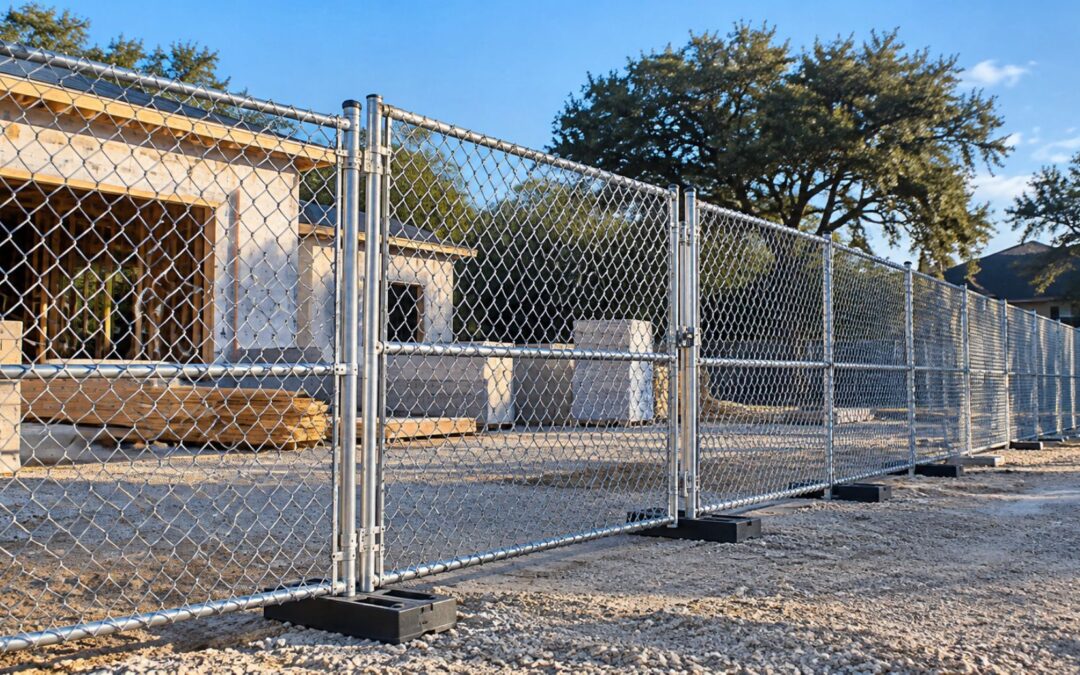
A construction project, outdoor event, or property renovation can change how people move through a space. Before work begins or guests arrive, you need clear boundaries and a practical way to manage access.
Temporary fencing provides a removable barrier for projects that do not require a permanent fence. For San Antonio property owners, contractors, and event organizers, choosing the right setup starts with understanding what the fence needs to accomplish.
What Is Temporary Fencing?
Temporary fencing is a fence system installed for a limited period and removed when it is no longer needed. Common applications include construction perimeters, event enclosures, and restricted work areas.
Unlike a permanent fence, a temporary system can accommodate changing layouts and project timelines. Available systems include portable panels and post-driven fencing, with options such as access gates and privacy screens. National provider Sunbelt Rentals outlines several temporary fencing and pedestrian barrier options.
When Does Temporary Fencing Make Sense?
Construction and Renovation Projects
Temporary construction fencing helps define the work area and discourage unauthorized entry. It also creates a visible separation between active work and surrounding spaces.
Plan the perimeter around daily operations. Workers, delivery trucks, and equipment need convenient access, while neighboring entrances and pedestrian routes need careful consideration.
Outdoor Events
Festivals, community gatherings, and private events often need designated entrances, ticket lines, and restricted areas. Temporary fencing can help organize these spaces and guide visitors.
Choose the barrier for its purpose. A low pedestrian barricade can help direct a queue, while a taller fence may be more appropriate around equipment storage or backstage areas.
Property Repairs and Fence Replacement
When an existing fence is removed or damaged, a temporary barrier may help define the opening until repairs are complete.
Explain your containment needs before selecting a system. A barrier used to mark a work zone may not be suitable for keeping a particular pet inside a yard.
Common Temporary Fencing Options
Freestanding Fence Panels
Portable panels connect to form an enclosure and rest on support bases. They are worth considering when the layout may change or when driving posts into the ground is unsuitable.
The installation plan should account for the surface, slope, supporting hardware, and placement of bases near walking routes.
Post-Driven Temporary Fencing
Post-driven systems use posts installed in the ground to support the fencing. They may suit projects where the perimeter will stay in place for an extended period.
Ask the installer to evaluate ground conditions, underground utilities, and any surface restoration needed after removal.
Pedestrian Barricades
Barricades help organize foot traffic and establish visible boundaries. They are useful for lines and controlled entry areas, but serve a different purpose from a full perimeter fence.
Privacy Screens
Screening can reduce visibility into a work or storage area. Before adding it, have the provider confirm that the fence and its supports are appropriate for the added wind load. Privacy screening should be part of the installation plan, rather than an afterthought.
What Affects Temporary Fencing Costs?
The cost of temporary fencing in San Antonio depends on the project. To compare quotes accurately, look beyond the advertised rental rate.
Ask for an itemized estimate covering:
-
Fence length and type: The perimeter and system selected.
-
Rental duration: The initial term and charges for extensions.
-
Delivery, installation, and removal: Which services are included.
-
Gates: The number and size of pedestrian and vehicle openings.
-
Accessories: Screening, supports, and other required components.
-
Site conditions: Slopes, surface conditions, and delivery access.
Also clarify who handles repairs, adjustments, or relocation during the rental period. A clear scope makes it easier to compare proposals and avoid unexpected charges.
How to Plan Your Fence Layout
Start with a simple sketch showing the project boundary, entrances, buildings, and nearby walkways. Mark where people and vehicles need to enter and identify any sections that may move as work progresses.
Before requesting a quote, gather your approximate measurements, project dates, site photos, and gate requirements. Tell the provider whether the fence will stand on soil, gravel, asphalt, or concrete.
Ask who will inspect the installation and address loose panels, shifted bases, or damaged connections during use.
Contact Superior Fence of San Antonio to discuss your project and ask about available fencing options.
Frequently Asked Questions
Can temporary fencing be installed on concrete?
Freestanding panels may be suitable for concrete because they use support bases. The provider should confirm the correct support arrangement for the site and intended use.
Can I add gates to temporary fencing?
Many systems accommodate pedestrian or vehicle gates. Identify the largest vehicle or piece of equipment that needs access before choosing the opening size.
Should I rent or buy temporary fencing?
Renting may suit a single project with a defined end date. Buying may make sense for repeated use, provided you can manage storage, transportation, installation, and maintenance.
Discuss Your San Antonio Fencing Project
A useful fencing plan starts with your property, timeline, and access needs. Whether you are organizing a renovation or planning a longer-term improvement, those details help clarify the right next step.
